
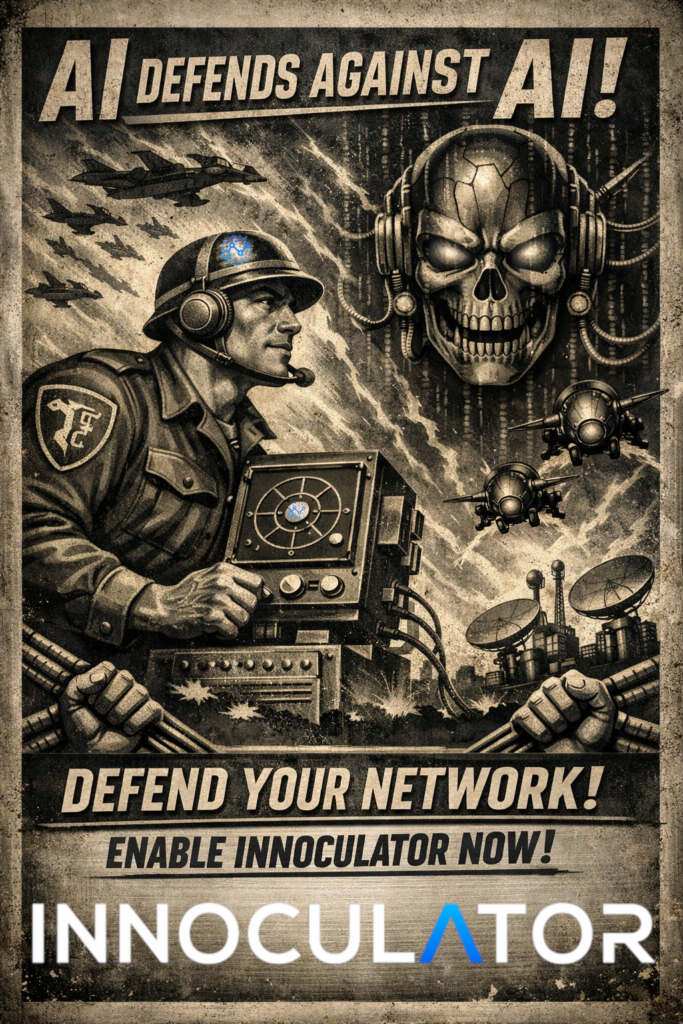
The Five Eyes cyber security agencies’ joint statement on 22 June 2026 marks a turning point in how national security organisations are framing cyber risk. It is not a forecast or a warning about what might happen in the future. It is a declaration that the threat landscape has already changed, and that AI has permanently altered the tempo of cyber operations. For CISOs, the implications are immediate and structural.
The statement makes it clear that AI has eliminated the defender’s traditional time advantage. Attackers are now using automated systems to perform reconnaissance, identify vulnerabilities, generate exploit chains, and move laterally at a speed that human‑centred processes cannot match. The window between a vulnerability being discovered and being exploited has collapsed to the point where manual patch cycles and ticket‑driven workflows are no longer viable as primary controls. The Five Eyes describe an environment where every exposed asset is continuously probed by autonomous systems, and where the sophistication of an attack no longer depends on the skill of the operator but on the capability of the model they are using.
A particularly important part of the statement is the treatment of legacy systems. The agencies describe unsupported and outdated platforms as “easy targets” and “strategic liabilities.” This is not hyperbole. AI‑driven scanning tools can fingerprint legacy technologies, identify unpatched vulnerabilities, and assemble exploit paths without requiring specialist expertise. For many organisations, these systems cannot simply be retired or replaced, which means the risk they represent must be mitigated through compensating controls that operate at the same speed as the threat.
The Five Eyes also shift the conversation from technical controls to leadership accountability. Cybersecurity is framed as a board‑level responsibility, and executives are expected to understand whether their controls will hold under AI‑enabled attack conditions. This requires visibility into control effectiveness, evidence‑based reporting, and a move away from compliance‑driven security toward resilience‑driven security. CISOs must be able to articulate not only the organisation’s current posture but also its readiness for a threat landscape where adversaries operate at machine speed.
The most consequential part of the statement is the explicit call for defenders to integrate AI into their security operations. The agencies emphasise that AI is not merely a threat vector; it is also the most powerful defensive tool available. They highlight the need for automated vulnerability discovery, AI‑assisted code and configuration analysis, behavioural anomaly detection, and autonomous response capabilities. The message is clear: human analysts remain essential, but they must be augmented by systems capable of operating continuously and at scale.
This is precisely where Innoculator fits into the defensive model implied by the Five Eyes. Innoculator assumes that attackers are already using AI and that defenders must match that capability. Its multi‑agent AI powered Virtual Patch approach means mitigations for vulnerabilities can be in place in minutes when they appear. This directly addresses the compressed vulnerability‑to‑exploit window described in the statement.
In environments where legacy systems cannot be retired, Innoculator provides a practical mitigation path. It generates defensive virtual patches even when official vendor patches are unavailable. This allows CISOs to materially reduce risk without requiring immediate system replacement, aligning with the Five Eyes’ emphasis on compensating controls for high‑risk legacy assets.
The Five Eyes statement is a recognition that the traditional security operating model has reached its limits. CISOs must now shift from human‑paced defence to machine‑paced resilience. Innoculator represents the architecture required for this shift: AI defending against AI, operating continuously, autonomously, and at the speed the modern threat landscape demands.

One Response
Great content! Keep up the good work!